News
How to build a beauty brand that lasts: Dr Sam Bunting on growing Dr Sam's skincare
Back to NewsFrom Harley Street to Sephora: Why Slow and Steady Growth Can Win
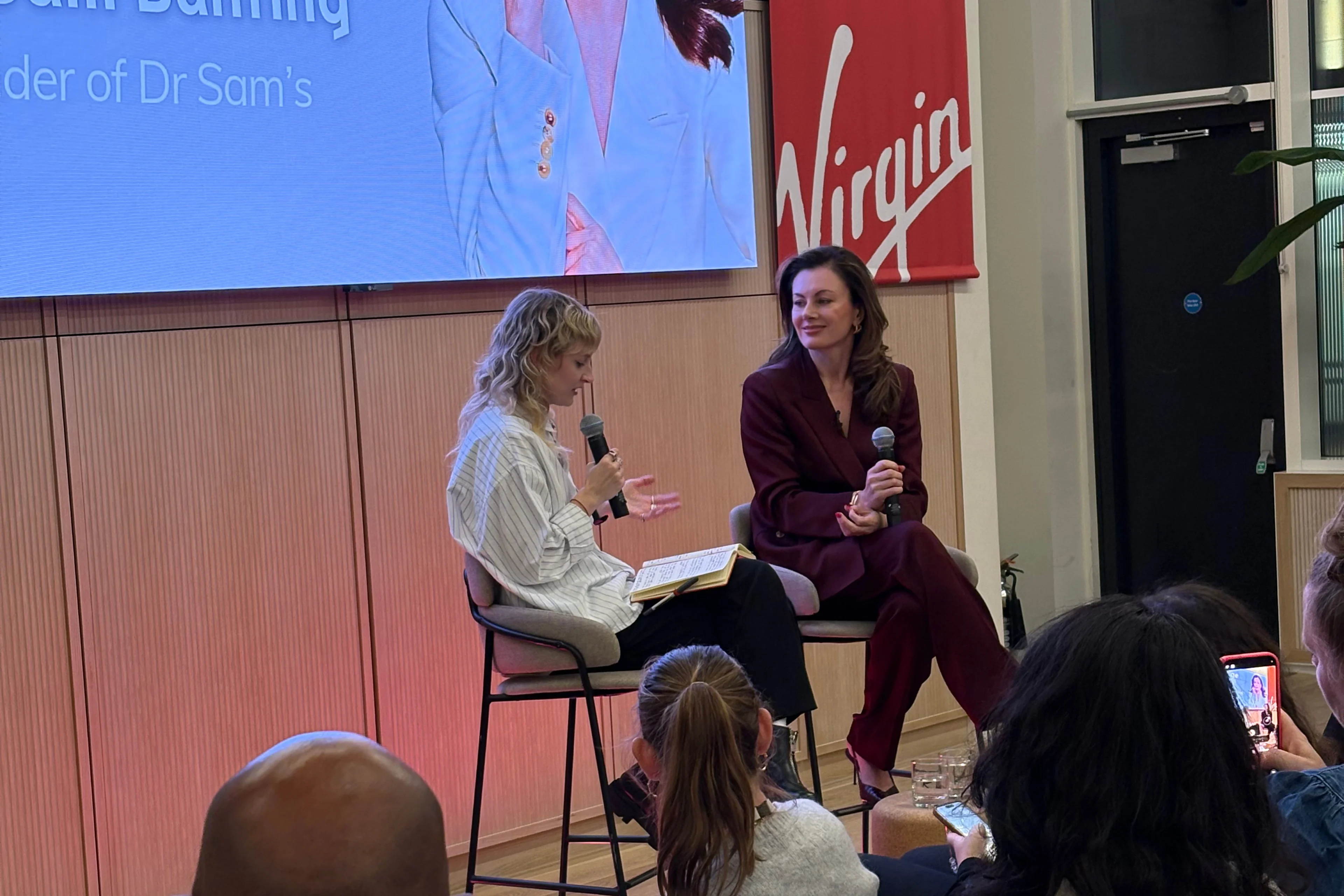
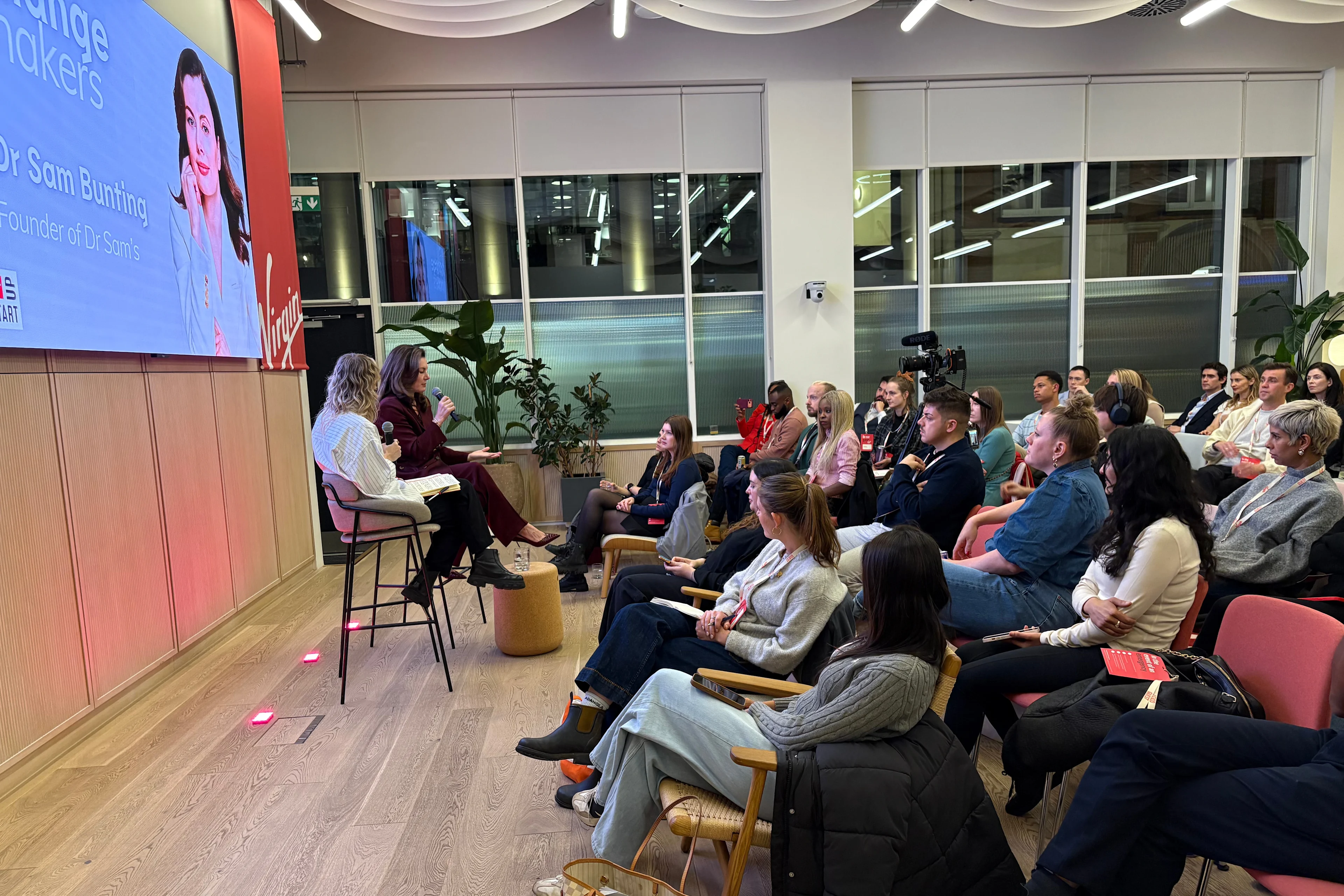
At our latest Changemakers event, we welcomed Dr Sam Bunting, cosmetic dermatologist and founder of Dr Sam's Skincare, to Virgin HQ for an honest conversation about building a beauty brand that lasts.
Today, Dr Sam's is stocked in Sephora and Space NK, with a loyal customer community and a growing international presence.
But Sam's journey wasn't about moving fast, chasing trends, or launching dozens of products.
It took her six years to turn her idea into a business. She started with just £15,000 of her own money, launched one product, and spent years turning down retail opportunities.
In an industry obsessed with the next big thing, Sam has taken a refreshingly different approach: build something genuinely useful, earn customer trust, and grow at a pace that makes sense.
Here's what we learned from the conversation.
Finding a Problem Worth Solving
Before becoming a founder, Sam trained as a doctor and built her career in dermatology, eventually establishing her Harley Street practice.
Along the way, she also worked in television, presented a beauty programme and became a global brand ambassador for Dolce & Gabbana Skincare.
Those experiences gave her valuable insight into the beauty industry, but it was the conversations happening in her clinic that ultimately inspired her business.
Sam kept seeing women arriving with bags full of expensive skincare products, frustrated that despite spending more time and money on their routines, their skin wasn't improving. Many were trying to manage adult breakouts while also addressing signs of ageing. The products they were buying often made things more complicated.
Sam recognised that the industry was offering more products when customers actually needed greater simplicity. Her solution was a straightforward four-step skincare routine: cleanse, activate, hydrate and protect.
It was an approach she'd already been using successfully with patients. The question was whether she could turn that expertise into a product range that worked beyond her clinic.
Six Years to Start, £15,000 to Launch
Sam was first approached about creating a skincare brand around 2012.
But it would take another six years before she launched one herself.
During that time, she explored partnerships with retailers and other interested parties, but the right opportunity never quite materialised.
Looking back, she believes that time was valuable.
She learned from working with established beauty brands, built an online community, and developed a much deeper understanding of what her customers needed.
Eventually, the opportunity became impossible to ignore.
The affordable cleansers she regularly recommended to patients kept being discontinued, leaving a gap in the skincare routines she was prescribing - so Sam decided to create her own.
Through her network, she found a chemist and manufacturer who understood her vision and helped her develop the first product.
She invested approximately £15,000 of her own money to bring it to market.
Rather than launch an entire range, she started with one cleanser.
Her thinking was simple. Even if the wider business didn't work, she'd have created something genuinely useful for her patients.
That cleanser went on to become the foundation of Dr Sam's Skincare.
Building a Brand Around Simplicity
One of the strongest themes throughout Sam's conversation was simplicity.
She described her approach as "ruthless rationality", challenging the beauty industry's tendency to make skincare more complicated than it needs to be.
Rather than encouraging customers to buy endless products, Dr Sam's focuses on a carefully considered routine designed to work together.
That philosophy extends into product development.
Sam explained that she doesn't launch products simply because an ingredient is trending or a new category is attracting attention.
Instead, she asks whether the product solves a genuine problem and whether it would make a meaningful difference to the patients she sees in her clinic.
If she wouldn't recommend it to a patient, why should it be part of her brand?
That approach means product development can take longer, but Sam believes it creates products customers want to use for years rather than months.
Her original cleanser has now been on the market for eight years, and Sam shared that it has become a bestseller in Sephora and Space NK.
For her, that's what building something to last looks like.
Why Customer Trust Is Everything
Trust was another recurring theme throughout the evening.
In an industry full of marketing claims, influencer recommendations and constantly changing trends, Sam wanted to create a brand customers could rely on.
She began building that trust long before launching her products.
Through YouTube and other educational content, she shared practical skincare advice, explained ingredients, and challenged the idea that customers needed increasingly complicated routines.
Importantly, she was also willing to tell people what they didn't need to buy. That consistency became central to the brand.
Sam explained that the advice she shared online years before launching Dr Sam's still aligns with the products and principles behind the business today.
Integrity remains one of the company's core values.
And for Sam, protecting that trust sometimes means making difficult commercial decisions.
When Things Go Wrong, Tell the Truth
One of the most valuable stories Sam shared came from a product launch that didn't go to plan.
The team had developed a tinted mineral sunscreen, a particularly challenging product to formulate because of the need to balance texture with effective broad-spectrum protection.
The approved production sample looked right. But shortly after launch, Sam began receiving feedback that suggested something wasn't working as expected.
There weren't necessarily enough complaints to trigger an automatic decision to stop selling, but Sam had a feeling something was wrong.
Rather than wait for more evidence while continuing to sell the product, she decided to stop sales and refund customers while the team investigated.
It was a difficult decision for a young business without large cash reserves. But Sam believes the way the company responded ultimately strengthened customer trust.
They acknowledged the problem, communicated transparently and took responsibility.
Her message was clear: own your mistakes early, tell the truth and fix them.
Sometimes the way a business responds when things go wrong says more about its values than anything it does when things are going well.
Saying No to Retail Opportunities
Today, Dr Sam's Skincare is stocked in major beauty retailers, but Sam was surprisingly reluctant to enter retail in the early years.
Harvey Nichols approached her just three weeks after launch.
She said no.
Boots also expressed interest.
Again, she said no.
For around six years, Sam continued turning down opportunities because she wanted to understand the business, refine its products, and build a strong direct-to-consumer foundation first.
She also wanted to retain control over how the brand developed. Dr Sam's remained entirely self-funded, with Sam reinvesting into the business rather than raising external investment.
She shared that the business became profitable within approximately four weeks of launching and didn't begin investing in paid marketing until around its third year. That approach helped the company build cash reserves and expand gradually.
When the time came to enter retail, Sephora was the first major partner. Space NK followed, with the brand expanding its presence as demand grew.
For Sam, the goal was never to be stocked everywhere as quickly as possible, it was to make sure the business was ready for each new stage.
Building Customer Loyalty, Not Just Chasing New Customers
Sam also spoke about the importance of creating products people return to.
She wanted Dr Sam's Skincare to become part of customers' everyday routines, rather than something they tried once because it was trending.
That thinking shaped the company's subscription model.
At the time of the conversation, subscriptions accounted for around 40% of the direct-to-consumer business.
Sam sees repeat purchasing as an important indicator of whether a product is genuinely delivering value. If customers aren't subscribing to something, she wants to understand why:
Could the formula be improved?
Is the product meeting the customer's needs?
It's a different approach from constantly launching new products to attract attention.
Instead, Dr Sam's focuses on creating products that earn a permanent place in customers' routines.
Building an Audience Before You Launch
When founders in the audience asked how to grow a brand without an established profile or huge marketing budget, Sam shared another important part of her journey.
She had spent years educating people and building relationships before selling a product.
That meant when Dr Sam's launched, there was already an audience familiar with her approach.
Sam stressed that audience size isn't necessarily the most important measure. What matters is how engaged people are and whether you've consistently helped them solve problems.
Her early PR relationships also came from years of working with people, offering expertise, and building goodwill. One beauty editor who had been a patient was already familiar with the cleansers Sam recommended and helped bring attention to the launch.
For founders starting from scratch, Sam encouraged finding ways to connect directly with the people they want to serve, sharing useful advice with their audience, and showing up consistently.
It's not always glamorous, but those relationships can become incredibly valuable when you're ready to launch.
Growing Without Outside Investment
Despite the brand's success, Sam has never raised external investment. That decision has been intentional.
She wanted the freedom to make decisions about product development, hiring, and expansion without pressure to grow faster than she felt was right.
Her Harley Street practice helped support the early stages of the business, allowing her to bootstrap and test each step before committing more money. Sam acknowledged that every founder's financial circumstances are different.
For those without an existing income stream, she suggested finding the leanest possible way to test whether an idea has demand.
That might mean creating a simple landing page, driving traffic to it and seeing whether people sign up before spending money developing a product.
Her own experience was unusual because she'd spent years working directly with her target customers - but the principle still applies: understand the problem, test your proposition, and avoid risking more money than necessary before you have evidence that people want what you're building.
Final Thoughts: What Founders Can Learn
Dr Sam's journey is a reminder that building a successful brand doesn't have to mean moving at breakneck speed.
Sometimes the strongest businesses are the ones that take their time, know exactly who they're serving, and resist the temptation to follow everyone else.
A few key lessons stood out:
Get close to your customer. Understand their problems before you start developing solutions.
Start small. You don't need an entire product range to prove your idea works.
Keep your proposition simple. Make it easy for customers to understand exactly what you're offering.
Build trust before you need to sell. Share your expertise and help people long before asking them to buy.
Don't chase every trend. Focus on products and services that deliver lasting value.
Know when to say no. Not every retail opportunity, partnership or growth milestone is right for your business.
Own your mistakes. Transparency and accountability can strengthen customer relationships.
Grow at your own pace. Sustainable growth can be just as ambitious as rapid expansion.
From a £15,000 launch to the shelves of Sephora and Space NK, Dr Sam's Skincare has grown by staying remarkably consistent with the principles it started with.
In a world where founders are often encouraged to move fast and break things, Sam's approach offers a different perspective: build carefully, make something people genuinely need, and give it the time to last.
Come to Our Next Changemakers Event
Changemakers takes place every month at Virgin HQ and is free to attend.
It's a chance to hear honest stories from successful founders, learn from the decisions behind their businesses, and connect with other entrepreneurs navigating the same challenges.
Join the Virgin StartUp Community to stay updated on upcoming Changemaker events and secure your place.
See you there!
— Written by Nina Evangeli, Virgin StartUp